Podcasts

Listen to our collection of podcasts on end-of-life topics, featuring expert insights, personal stories, and thoughtful conversations to help guide you through important decisions.

Your Life, Your Death, Your Choice: Leading Tough End‑of‑Life Conversations with End of Life Choices California

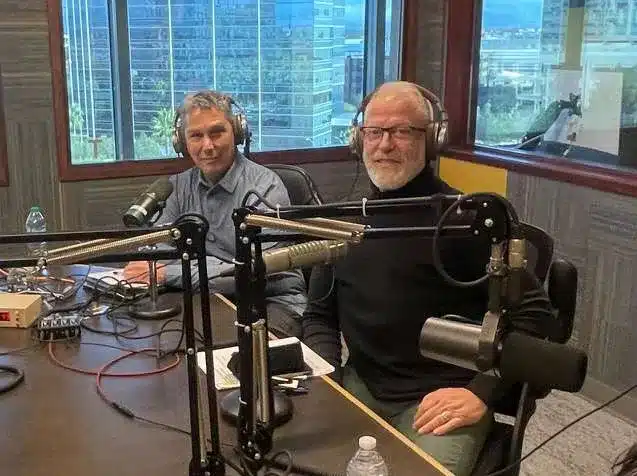
Executive Director Mark Greenberg and San Diego volunteer Grant Affleck were honored to discuss End of Life Choices California, your end-of-life options, and Medical Aid in Dying on Drew Schlosberg’s Spotlight on the Community podcast.  Find it wherever you listen to your podcasts.

Understanding End-of-Life Choices & MAiD on Journey Home Radio Podcast

Executive Director Mark Greenberg and Volunteer Grant Affleck were pleased to be guests on a 2-part podcast with Journey Home Radio (also broadcast on KPRZ) earlier this month. They discussed end-of-life options, including Medical Aid in Dying, resources available at EOLCCA and shared some personal stories.

Hosted by Thesa Miele, Iris Wise, Cody Spradlin and Yvette Lynch in partnership with Singing Hills Memorial Park, Singing Hills Memorial Park’s podcast is a broadcast dedicated to guiding families through one of life’s most sacred transitions.


How to Talk About Death and Dying

By Sue Gess

Listen to this podcast with EOLCCA Advisory Council member and Client Volunteer, Sue Gess with the Southern Caregiver Resource Center. Sue does a great job destigmatizing conversations around end of life planning and death and dying.

SCRC provides free caregiver support services for families caring for frail older adults and adults living with Alzheimer’s disease and related disorders in San Diego County. SCRC offers a wide variety of support services that include education, care planning, case management, counseling, respite care and support groups.

What explains the number of medically assisted deaths in Canada and California?

Adrian Byram is the co-author of a recent study comparing the rates of medically assisted deaths in Canada and California. While both jurisdictions legalized MAID in the same year and have similar population sizes, Canada has far more assisted deaths. Why is this? In this interview, we go through the surprising results of the study. We also discuss Adrian’s work on the ethics of advance directives, how technology might help with substitute decision making, and next steps for assisted dying in California.

Why do so few Californians take advantage of medical aid in dying?

Stewart Florsheim, an EOLCCA Board member, wants to spread awareness about medical aid in dying and all end-of-life options available to Californians. This is his perspective.

‘She Didn’t Want to Die. But She Didn’t Want to Suffer.’

By February 22, 2024

One in five states allow terminally ill people to take life-ending medications prescribed by a doctor instead of waiting for death. This week, we talk with journalist Steven Petrow about his sister’s choice to use medical aid in dying. Guest: Steven Petrow, Journalist and author.

Preparativos para nuestra muerte: Cuerpo Corazon Comunidad

By Marisol Muñoz-Kiehne, PhD

Tema de la semana: Preparativos para nuestra muerte.

Invitados:
Marisol Muñoz-Kiehne, PhD (“Doctora Marisol”), psicóloga, educadora, oradora, escritora, y fundadora de Cuerpo Corazón Comunidad.
Gabriela Vilchiz, Cuidadora y voluntaria con End of Life Choices California.

Choosing the End: Not Born Yesterday

While we don’t like to think about it, we know that death is inevitable. In several states, adults who wish to control their own deaths have the option of medically assisted dying.

Our guest, Fran Johns, is a member of the board of End of Life Choices California, a nonprofit group that provides information, support and guidance to those seeking help when they have a terminal illness. She shares information on how to talk with your family, understanding the process, and reminds us that we do have control, even at the end.

Stewart Florsheim: Advancing Death With Dignity.

Stewart Florsheim says that as attitudes about death with dignity change, so does the law. New amendments to the existing California End of Life Options Act, which will become effect on January 1, 2022, will improve the law and make it more accessible to terminally ill patients.