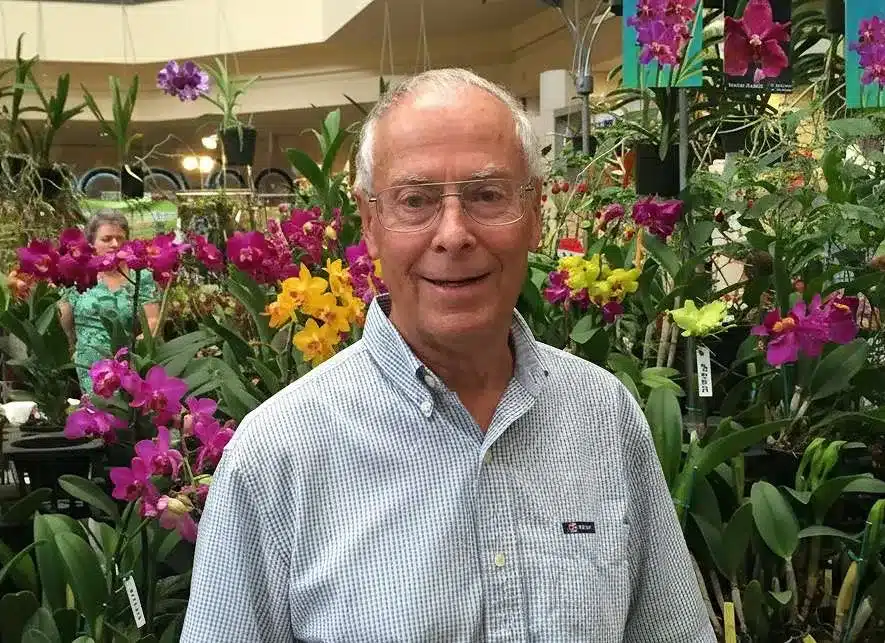
My husband’s strong will to live led to his belief that the next round of chemo would be the one that was successful…
By Christine Lynch
My husband’s strong will to live led to his belief that the next round of chemo would be the one that was successful – and then the next one, and then the one after that! He waited so long to discontinue his treatment that he didn’t qualify for hospice until he was very near death. We had no family nearby, and our group of friends had mostly either passed away or moved away during the years of his illness. Except for a few neighbors, we were very much alone and very eager to receive any help that hospice could offer us. Unfortunately, very little was forthcoming. There were only two volunteers for our entire geographic area, and both of them were overloaded with cases and therefore unavailable.
What is true is that the hospice called in their MAiD support staff after we made the request. First, a hospice physician came to our home to confirm that MAiD was my husband’s choice, that he was physically capable of swallowing the medication, and that he had adequate pain control. Next came a hospice social worker, and then a MAiD social worker who each gave us pamphlets describing their organizations’ responsibilities and the legalities of the process.
Each verified that choosing MAID was my husband’s decision, and each assured him that acceptance of the medication was not a commitment to take it then or ever. Next came another physician to make a second assessment of my husband’s condition and verify his wishes. A few days later, a pharmacist delivered the medication and gave us instructions on how to prepare it and how to ingest it.
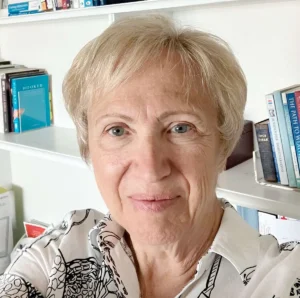
Christine Lynch
A hospice nurse visited every couple of days. She and the rest of the hospice staff attended to all my husband’s physical needs and were very nice and very caring. However, it was the MAiD issue that was foremost in our minds, and this was a topic that she was unwilling to discuss – except to say that it was verboten for a hospice worker to assist in any way or to be in the room when the patient took the medication. All questions were referred to a different MAID social worker I’d never met who took two days to respond. Sadly, at no time did she or anyone else ever mention the support that was available to us from End of Life Choices California.
It was in the wee hours of the morning that my husband expressed his desire to take the medication. He said he wanted to sleep for a couple of hours, then take the medication when he awoke and felt a bit stronger. He didn’t want the family notified until after it was over. Paralyzed by the enormity of what I was about to do, I sat by his bed and watched him sleep. After a few short hours he awoke and said he was ready to proceed.
I’d been expertly coached by the pharmacist on exactly how to prepare the medication. However, in that moment, my mind went completely blank. Suffering from anxiety, insomnia, and anticipatory grief, I read and reread the written instructions. The words and my tears just all ran together. I was terrified I would make a mistake, and I would somehow worsen the situation.
Finally, I wiped away my tears, and I pulled myself together enough to follow the directions.
With shaking hands, I brought my husband the suggested popsicle and a cup with the medication and a straw in it. After we exchanged a few loving words, and without hesitation, he took a few licks of the popsicle I held to his lips, and then he began to drink. Contrary to what we’d been told to expect, there weren’t 10-20 minutes after he drank during which he felt increasingly sleepy. Instead, he died with the straw in his mouth after only a couple of sips.
And then the reality of the situation set in. The battle is over. He is gone. I’m completely alone! I fell to pieces; mourning for him and what might have been, mourning for me and what never would be. Hours passed before I was capable of notifying anyone.
Weeks later, when I could make sense of what I was reading, I looked through one of the MAiD pamphlets the social worker had given me, and I learned of EOLCCA’s bereavement groups for MAiD survivors. I called that number and joined a group. It was there that I learned how different my experience might have been with EOLCCA’s support.
With that in mind, I have become a volunteer for EOLCCA, hoping that I could make a contribution to the effort being made to educate the public, hospice organizations, healthcare workers, and anyone else who needs to know about this wonderful resource that is available to them. My sincere wish is that no one else has to do it all alone the way I did.
Author note: Christine Lynch, an EOLCCA volunteer, is an East coast transplant, an avid reader, daily walker and obsessive Mahjong player. After retiring as a corporate Financial Analyst, she wrote two books about her struggles with Fibromyalgia and authored an online column called Tender Points.
Need support? If you would like to request support from our team, please visit our request support page. To support our work visit, request a speaker, volunteer, or please visit Ways to Give.