Thankfully, the laws have changed. The culture has some catching up to do.
by Mary Abbott
End of Life Choices California (EOLCCA), in partnership with the Hospice of the North Coast, offers a Bereavement Group three to four times per year for people who have lost loved ones as a result of using medical aid in dying (MAiD). The attendees are typically referred to us through a hospice, a health care provider, word of mouth, or through one of our volunteers who assisted them through the process of using MAiD.
The group is a support group – not a therapy group. Held on Zoom and kept to eight participants, the group is confidential, supportive, and, most of all, a safe space. Our attendees need to be in a group with others who have gone through this process, because they feel especially alone. They grieve much like everyone else who has lost an important person in their life, except that they have an extra burden: the stigma attached to the use of medication to end suffering in the process of dying. And they don’t feel safe talking about it outside of their trusted circle.
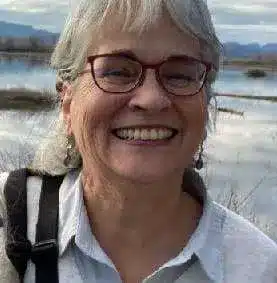
Mary Abbott
Why People Seek MAiD Bereavement Support
Some people come into the group because the family is now divided and not speaking to each other because a parent exercised their option to shorten their suffering, and some were not supportive of that choice. Some come into the group because they feel they have to keep the mode of death a secret and don’t have the right words to talk about the death. Some come because they are trying to make sense of what they could have done better or something unsettling that happened in the last moments.
Many come because they were not properly prepared for the process of this type of death. They don’t really understand what is about to unfold. Often the death happened far faster than they expected. Sometimes it takes much longer than expected. This is where EOLCCA volunteers are so important ahead of time: we inform and educate prior to the day of death.
Pharmacists often do a good job of preparing the loved ones for the technical aspects of administering the medication, but there is more to the picture. Sometimes information is difficult to absorb when facing an important, impending loss. When the grieving come into our group, often the relief they feel once they receive accurate information about the process, even though it comes post-death, is palpable.
Our attendees do have challenges. Sharing their stories, telling them out loud to a group of strangers/not-strangers, is triggering. The raw grief comes roaring back and they feel they are starting all over again with the loss. We warn them of this and help to prepare them for the onrush of feelings they thought were behind them. We are also confident that while painful, sharing in a safe space can be a pathway to learning to live with the loss.
Finding Words and Moving Forward
We brainstorm ways to talk about the death. We give assurances that there is no need to reveal the use of MAiD if one is not comfortable with it, assurances that the death was inevitable and was ultimately caused by an insufferable condition. It takes time to shift the cultural understanding and acceptance. By our fourth session, the acceptance of MAiD has taken a step forward and, most importantly, the participants feel supported.
“Having a safe place to openly talk with others about the emotional experience of watching and supporting a loved one choosing MAiD to end his or her life was really important,” says one of our participants. “The comfort and support from this group was immeasurable. It was such a comfort to know I’m not alone and that I don’t have to carry this experience for the rest of my life as a secret.”
“Having a safe place to openly talk with others about the emotional experience of watching and supporting a loved one… was really important”
Continued Support Options
Our “graduates” have the option to continue into another ongoing grief support group offered by the Hospice of the North Coast on Zoom. If you’re interested or know someone who might benefit from bereavement support, please have them contact Mary Abbott, co-facilitator.
Mary Abbott is a presenter, attends days of death, and co-facilitates EOLCCA’s bereavement group. She also helps out behind the scenes on administrative work. She has a long history of non-profit work experience, is a collage artist and an outdoorswoman. She lives in Sonoma and Sierra counties.